
World News

Global banking giant HSBC on Monday reported a shock pre-tax loss in the last quarter of 2015 with results for the year missing analysts' expectations, as it grapples with "seismic shifts" in the world economy.
HSBC last year announced a radical overhaul of its business to cut costs that included shedding 50,000 jobs worldwide, exiting unprofitable businesses and focusing more on Asia.
Like many global banks, HSBC is combating turmoil in global financial markets that has seen stocks and commodities plunge, while stricter regulations have driven up costs.
Last week Europe's largest bank said it would keep its headquarters in London, despite concerns about growing regulation in Britain and an upcoming vote on whether it could leave the European Union.
Net profit for 2015 dropped 1.2 percent to $13.52 billion from the previous year, HSBC said in a filing Monday, while pre-tax profit of $18.9 billion missed analysts' forecast of $21.8 billion.

Austria's combative interior minister on Saturday rejected EU criticism of its cap of 80 asylum claims per day, saying a letter of complaint to her from the bloc's migration commissioner was "sent to the wrong address".
"It should be generally known that Austria does not have an external EU border and is therefore not the first safe country that these people (migrants) set foot in," Johanna Mikl-Leitner told the Austria Press Agency (APA).
"If everybody stuck to the content of the letter (from migration commissioner Dimitris Avramopoulos), then Austria would not have a problem with it. But the letter was clearly sent to the wrong address," Mikl-Leitner said.
Instead, the complaints should be sent to safe countries that the migrants pass through on their way to Austria, she said, in a reference in particular to Greece, the main entry point in the European Union for migrants.
In 2015, over one million people reached Europe's shores -- nearly half of them Syrians fleeing the civil war -- causing the bloc a major political headache.
Austria last year took in 90,000 asylum seekers, making it one of the highest recipients in the EU on a per-capita basis, while almost 10 times that number passed through, mostly to Germany and Sweden.
Faced with a resurgent far-right opposition topping opinion polls, Austria's centrist government this week imposed the new cap and said only 3,200 migrants could pass through per day.
Border controls are being tightened and the government wants only 37,500 asylum claims this year.

In the latest crackdown on gay rights in Indonesia, the government has demanded all instant messaging apps remove same-sex emoticons or face a ban in the Muslim-majority country.
The emojis -- which are available on the popular apps LINE and Whatsapp as well as Facebook and Twitter -- depict same-sex couples holding hands and the rainbow flag, commonly used to symbolise the lesbian, gay, bisexual and transgender (LGBT) community.
"Such contents are not allowed in Indonesia based on our cultural law and the religious norms and the operators must respect that," Ismail Cawidu, spokesman for the Communication and Information Ministry, told AFP Friday.
He said of particular concern was that the colourful emojis and stickers could appeal to children.
"Those things might be considered normal in some Western countries, while in Indonesia it's practically impossible," he said.
Cawidu said the ministry had contacted all companies that used such content, including Twitter and Facebook, and failure to comply with the request to remove the emojis could lead to the apps being banned in Indonesia.

Pope Francis on Wednesday revealed plans for a new "match for peace" as he met Ronaldinho and other football stars at the Vatican.
The charity match will be staged at Rome's Olympic Stadium on May 29, the day after the Champions League final in Milan.
The first match for peace took place in 2014 and featured Ronaldinho, Lionel Messi and Diego Maradona and a host of other top players or former players.

Densely packed slums, rampant mosquitoes and a history of rapidly spreading infections make Asia particularly vulnerable to the devastating Zika virus, posing a massive challenge for the region, health experts warn.
Thailand confirmed Tuesday that a man contracted the mosquito-borne infection, blamed for a surge in the number of brain-damaged babies in South America, while Indonesia has also reported a domestic case.
The cases in Asia come as top US health authorities confirmed this week a patient in Texas contracted the Zika virus through sexual transmission, fuelling fears the disease may spread rapidly.
Officials in India worry it could be next, noting that the Zika and dengue fever-carrying Aedes aegypti mosquito thrives in the high-density communities of its teeming cities, where sanitation is often poor.
"In India particularly there is a great threat of the Zika virus spreading quickly given the presence of the Aedes mosquito and favourable environment," said Om Shrivastav, an infectious diseases specialist.
"It would definitely be a big challenge for Asian countries to control the spread of the virus... considering high population in the region," added Shrivastav, who is based in Mumbai, home to Dharavi, Asia's biggest slum.
More than half of Mumbai's 20 million inhabitants live in slums -- at least one million reside in Dharavi alone -- enduring cramped conditions, poor ventilation and a lack of toilets.
Every summer monsoon, heavy rains lash Mumbai for four months, flooding parts of the city, including the slums' maze of alleyways, which become fertile breeding grounds for mosquitos and lead to a massive spike in tropical diseases.
Soumya Swaminathan, director general of the Indian Council for Medical Research, warned against panicking but said a surge of dengue cases worldwide recently, was a cause for concern.
"(Because of) the way dengue has spread over the last several years across continents and across countries, (and with) Zika being a mosquito borne illness, there is a potential for spread," she told Indian news channel NDTV.
Zika, which was first identified in Uganda in 1947, causes relatively mild flu-like symptoms and a rash.
But the World Health Organization (WHO) said it "strongly suspected" the Zika virus of being responsible for a rapid rise in cases of microcephaly, a condition in which a baby is born with an abnormally small head and brain.
Latin American countries, particularly Brazil, have reported a leap in cases of microcephaly since the Zika outbreak was declared in the region last year.
The UN-body has declared the situation a "public health emergency of international concern" and has created a global Zika response unit to contain the virus.
WHO expert Anthony Costello has stressed there is no reason to believe the crisis would remain limited to Latin America, where 25 countries so far have reported Zika cases.

A new coffee diet claiming to help lose weight and improve IQ is gaining a major following in the United States -- and raising eyebrows among doctors skeptical of its benefits.
Dave Asprey, the founder and CEO of the "Bulletproof Diet," pulls no punches when making claims for his radical health recipe, cup of coffee in hand.
"You become a better employee, better parent, better friend, better person," said the former Silicon Valley entrepreneur now living in Canada. "My energy changes, my brain changes. I can pay attention, I can follow through."
The cornerstone of Asprey's diet is a drink called Bulletproof Coffee, a modified version of the caffeinated beverage which uses beans stripped of mycotoxins -- essentially mold that forms during the fermentation process.
Add to that butter from grass-fed cows and medium-chain triglycerides (MCT) oil.
The ingredients are blended together to produce a creamy, naturally sweet beverage a bit like a milkshake, taken at breakfast in lieu of a meal.
"So you drink a couple of these and all of a sudden you don't care about food for a very long time," said Asprey. "Your brain has energy that doesn't come from sugar, you didn't want sugar in your coffee and you lose the craving and you sort of have freedom."
Asprey used to weigh 300 pounds, and spent much of his life battling to lose weight.
The coffee diet idea came to him during a trip to Tibet in 2004. He was weak with altitude sickness while traveling in the mountainous region -- until he drank yak butter tea.
Asprey was so impressed by the energetic effect of the drink that he tried to reproduce it at home.
After years of trying all kinds of ingredients and combinations, he unveiled a patented formula in 2009 through his blog and on social media, claiming the coffee and an associated health regimen helped him attain a "bodybuilder" physique.

Holocaust survivor Ruth Klueger on Wednesday lauded Germany for keeping its doors open to thousands of war refugees, calling Chancellor Angela Merkel's "we can do it" slogan "heroic".
"This country, which was responsible for the worst crimes of the century, has won the applause of the world today," the 84-year-old scholar told the German parliament in an address as part of commemorations for International Holocaust Remembrance Day.
"I am one of the many outsiders who has gone from surprise to admiration," Klueger said, describing Merkel's rallying call of "We can do it" as a "simple but heroic slogan".
Merkel has repeated the mantra over recent months as she has resisted fierce opposition -- even from within her conservative camp -- to reverse her policy towards refugees.
Klueger, who now lives in the United States, said it was precisely Merkel's approach toward those fleeing war and misery that had moved her to accept the German parliament's invitation to speak on the 71st anniversary of the liberation of Auschwitz death camp.
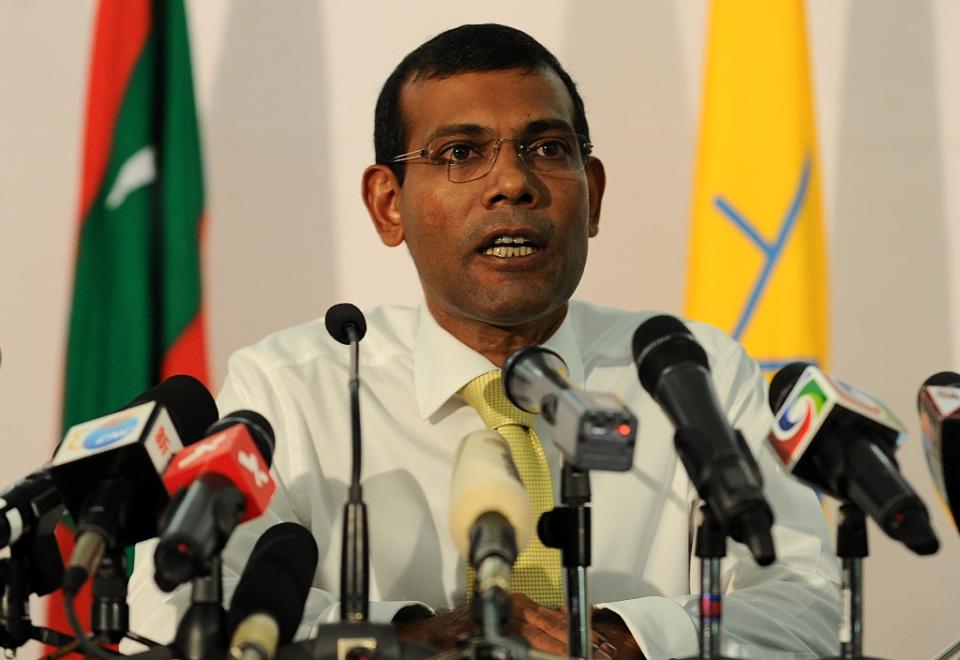
Former Maldives president Mohamed Nasheed landed in Britain on Thursday, his aide told AFP, after the Indian Ocean islands' government granted him prison leave for urgent surgery.
"We have just landed," said Sabra Noordeen, who was travelling with Nasheed, whose conviction last March on terror-related charges has been widely criticised.
A smiling Nasheed, who wore a suit and tie, later walked into the terminal at Heathrow Airport and was met by his British lawyer Amal Clooney, wife of Hollywood star George Clooney, an AFP photographer saw.
He left the Maldives on Monday for Sri Lanka after resolving a last-minute legal dispute with the government over his 30-day release for the spinal cord surgery in the UK.
He then left for Britain on Thursday.
The Maldives government said Nasheed was travelling under what diplomatic sources described as a deal brokered by India, Sri Lanka and Britain.
But Nasheed refused a government request to leave a relative behind to act as a guarantor liable to prosecution if he failed to return to serve the rest of his sentence.

Spain's Princess Cristina, the sister of King Felipe VI, and her husband will go on trial Monday for corruption in a high stakes case likely to further damage the monarchy's image.
The highly anticipated trial of the royal couple and 16 other accused will run until June at a court in Palma, on the Mediterranean island of Mallorca, where the Spanish royal family has a seaside holiday home.
Cristina, 50, will be the first direct member of the royal family facing criminal charges since the monarchy was reinstated following the death of dictator General Francisco Franco in 1975.
The case is centred on the shady business deals of the Noos Institute, a charitable organisation based in Palma which her husband, former Olympic handball player Inaki Urdangarin, chaired from 2004 to 2006.
As a result of their indictment, last year, King Felipe VI, who took over from his father Juan Carlos in June 2014, stripped Cristina and her husband of their title as Duke and Duchess of Palma de Mallorca, in a bid to undo damage to the monarchy's image ahead of the trial.
Juan Carlos had given the couple the title when they married in 1997 in a lavish ceremony at the height of the popularity of the Spanish royals.
"Felipe VI cannot allow there to be the slightest doubt over the rigour of his sister's trial," historian Pilar Urbano, who has written extensively about the royal family, told AFP.
The trial must be "exemplary, the opposite would hurt him," she added.

Parisians bid goodbye to a year of unprecedented terror attacks when clocks chimed midnight Friday, as thousands of defiant revellers thronged the Champs-Elysees for New Year's Eve celebrations.
While the traditional fireworks display was cancelled this year over fears of a terrorist attack, crowds still filled the iconic boulevard lined with trees donning sparkling garlands to welcome 2016.
"It's New Year. We wanted to have fun as usual, in spite of everything, so we came on the Champs as this is the perfect place for it," said Joy along with her friend Rebecca, in their 20s, who came for the celebrations.
"I'm not particularly scared," said Joy. "An attack can happen anywhere at any time. But that can't stop us from living."
Behind her, Western tourists uncorked a bottle of wine while some Asian visitors took a photo and several older couples danced.
The festivities are the largest public gathering since jihadists killed 130 people in Paris in November in a wave of gun and suicide bombings claimed by the Islamic State group.
"After what our city has lived through, we have to send a signal to the world," said Paris mayor Anne Hidalgo, promising a "sombre and dignified show".
In the Place de la Republique square in central Paris, visitors flocked to an open air shrine for the victims of the November 13 attacks.
Lila Rehane, a 49-year-old from the southern French city of Marseilles who came to pay homage at the site, said she wanted to see peace return in 2016 after a year of "anguish".
- 'Crappy year' -
Category
Sport
Fernandes closing in on Premier League history as assist record looms
 Fernandes closing in on Premier League history as assist record looms
Premier League confirms 2026/27 fixture release date and season schedule
 Premier League confirms 2026/27 fixture release date and season schedule
Haaland hat-trick powers Manchester City past Liverpool 4-0 as Chelsea hit seven in FA cup rout
 Haaland hat-trick powers Manchester City past Liverpool 4-0 as Chelsea hit seven in FA cup rout
Chelsea FC reports record £262m loss despite revenue growth and European success in 2024–25 season
 Chelsea FC reports record £262m loss despite revenue growth and European success in 2024–25 season
UK government announces £10m boost for grassroots sport as Football Foundation marks 25 years
 UK government announces £10m boost for grassroots sport as Football Foundation marks 25 years
Global student talent heads to Lausanne for record-breaking Olympic Case Study final 2026
 Global student talent heads to Lausanne for record-breaking Olympic Case Study final 2026
Milano Cortina 2026 draws record media interest with over 13,000 accredited journalists and broadcasters
 Milano Cortina 2026 draws record media interest with over 13,000 accredited journalists and broadcasters
Wimbledon expansion wins key court battle, clearing path for major upgrade
 Wimbledon expansion wins key court battle, clearing path for major upgrade

Premier League set for five Champions League spots again? Here’s what needs to happen for 2026/27
 Premier League set for five Champions League spots again? Here’s what needs to happen for 2026/27
Education
-
 UK set to rejoin Erasmus+ in 2027, marking a new chapter in EU–UK educational cooperation
The European Union and the United Kingdom have reached a landmark agreement to bring the UK back into the Erasmus+ programme starting in 2027, signalling a renewed commitment toRead More...
UK set to rejoin Erasmus+ in 2027, marking a new chapter in EU–UK educational cooperation
The European Union and the United Kingdom have reached a landmark agreement to bring the UK back into the Erasmus+ programme starting in 2027, signalling a renewed commitment toRead More... -
 UK government targets junk food in schools amid rising child obesity crisis
In a sweeping reform of school meal policies, the UK government has announced plans to remove high-sugar and deep-fried foods from school menus, marking the most significant update toRead More...
UK government targets junk food in schools amid rising child obesity crisis
In a sweeping reform of school meal policies, the UK government has announced plans to remove high-sugar and deep-fried foods from school menus, marking the most significant update toRead More... -
 Scottish Greens propose new private school tax to fund state education amid wider reform debate
The Scottish Greens have unveiled plans to introduce a new tax on private schools, arguing the measure would help address chronic underfunding in state education and public services acrossRead More...
Scottish Greens propose new private school tax to fund state education amid wider reform debate
The Scottish Greens have unveiled plans to introduce a new tax on private schools, arguing the measure would help address chronic underfunding in state education and public services acrossRead More... -
 Oxford University secures £2m gift to boost primary care in Tunisia, extending legacy of global health philanthropy
The University of Oxford has received a further £2 million donation from Fondation Docteur Sadok Besrour, deepening its efforts to expand primary health care research and education in TunisiaRead More...
Oxford University secures £2m gift to boost primary care in Tunisia, extending legacy of global health philanthropy
The University of Oxford has received a further £2 million donation from Fondation Docteur Sadok Besrour, deepening its efforts to expand primary health care research and education in TunisiaRead More... -
 Oxford historian Lyndal Roper wins 2026 Holberg Prize for groundbreaking research on Witch Hunts and Martin Luther
Lyndal Roper, Emeritus Regius Professor of History at University of Oxford, has been named the 2026 laureate of the prestigious Holberg Prize—one of the world’s most significant honours forRead More...
Oxford historian Lyndal Roper wins 2026 Holberg Prize for groundbreaking research on Witch Hunts and Martin Luther
Lyndal Roper, Emeritus Regius Professor of History at University of Oxford, has been named the 2026 laureate of the prestigious Holberg Prize—one of the world’s most significant honours forRead More... -
 UK issues first official screen time guidance for under-5s as parents struggle with digital overload
The UK government has unveiled its first clear national guidance on screen time for children under five, stepping into what many parents describe as one of the toughest challenges of modernRead More...
UK issues first official screen time guidance for under-5s as parents struggle with digital overload
The UK government has unveiled its first clear national guidance on screen time for children under five, stepping into what many parents describe as one of the toughest challenges of modernRead More... -
 UK expands school-based nurseries to cut childcare costs by thousands for families in need
The UK government has announced a major expansion of school-based nurseries, aiming to ease childcare costs and improve access for families in the country’s most disadvantaged areas.Read More...
UK expands school-based nurseries to cut childcare costs by thousands for families in need
The UK government has announced a major expansion of school-based nurseries, aiming to ease childcare costs and improve access for families in the country’s most disadvantaged areas.Read More... -
 London launches school uniform reuse network to cut costs, reduce waste, and support families
A new London-wide initiative aimed at tackling rising school uniform costs and reducing textile waste has officially launched, offering practical support to both families and schools.Read More...
London launches school uniform reuse network to cut costs, reduce waste, and support families
A new London-wide initiative aimed at tackling rising school uniform costs and reducing textile waste has officially launched, offering practical support to both families and schools.Read More... -
 Ofsted launches pilot to bring more serving school and college leaders into inspection teams
Ofsted has announced a new pilot programme aimed at bringing more serving school and college leaders into inspection teams across England’s education system. The initiative is designed toRead More...
Ofsted launches pilot to bring more serving school and college leaders into inspection teams
Ofsted has announced a new pilot programme aimed at bringing more serving school and college leaders into inspection teams across England’s education system. The initiative is designed toRead More... -
 Ofsted report warns children in care face education ‘lottery’ due to inconsistent local authority support
A new report from Ofsted has highlighted significant barriers preventing many children in care from reaching their full academic potential, despite strong efforts by schools and collegesRead More...
Ofsted report warns children in care face education ‘lottery’ due to inconsistent local authority support
A new report from Ofsted has highlighted significant barriers preventing many children in care from reaching their full academic potential, despite strong efforts by schools and collegesRead More...

Our poll
UK News
-
 UK surpasses flood protection goals as major defence programme expands
The UK has exceeded its flood protection targets, with tens of thousands more homes and businesses now shielded from the growing threat of extreme weather. The Environment AgencyRead More...
UK surpasses flood protection goals as major defence programme expands
The UK has exceeded its flood protection targets, with tens of thousands more homes and businesses now shielded from the growing threat of extreme weather. The Environment AgencyRead More... -
 UK unveils record drone aid package to bolster Ukraine’s war effort
The United Kingdom has announced its largest-ever military drone package for Ukraine, pledging to deliver more than 120,000 drones in 2026 as Kyiv continues to defend itself against Russia’sRead More...
UK unveils record drone aid package to bolster Ukraine’s war effort
The United Kingdom has announced its largest-ever military drone package for Ukraine, pledging to deliver more than 120,000 drones in 2026 as Kyiv continues to defend itself against Russia’sRead More... -
 £80 million boost signals new chapter for UK’s medicines manufacturing and innovation
The UK government has unveiled a major £80 million investment package aimed at expanding access to vital medicines and strengthening the country’s fast-growing life sciences sector.Read More...
£80 million boost signals new chapter for UK’s medicines manufacturing and innovation
The UK government has unveiled a major £80 million investment package aimed at expanding access to vital medicines and strengthening the country’s fast-growing life sciences sector.Read More... -
 UK renters to gain stronger protections as councils prepare crackdown on rogue landlords
From 1 May, renters across England are set to benefit from sweeping new protections as the government rolls out the long-anticipated Renters’ Rights Act, marking one of the most significantRead More...
UK renters to gain stronger protections as councils prepare crackdown on rogue landlords
From 1 May, renters across England are set to benefit from sweeping new protections as the government rolls out the long-anticipated Renters’ Rights Act, marking one of the most significantRead More... -
 UK consumers rein in spending as fuel costs surge amid Middle East tensions
Rising fuel prices driven by escalating tensions in Iran cast a shadow over British consumer activity last month, prompting households to cut back on spending and rethink travel plans. FreshRead More...
UK consumers rein in spending as fuel costs surge amid Middle East tensions
Rising fuel prices driven by escalating tensions in Iran cast a shadow over British consumer activity last month, prompting households to cut back on spending and rethink travel plans. FreshRead More...
Culture
-
 £127.8 million lifeline for UK arts venues signals renewed push for cultural access
More than 130 cultural venues across England are set to receive a significant financial boost as part of a £127.8 million government investment aimed at widening public access to arts andRead More...
£127.8 million lifeline for UK arts venues signals renewed push for cultural access
More than 130 cultural venues across England are set to receive a significant financial boost as part of a £127.8 million government investment aimed at widening public access to arts andRead More... -
 Paddington and Sondheim lead the pack as Olivier Awards mark 50 years of theatre excellence
London’s theatre scene is buzzing ahead of this year’s Olivier Awards, where a charming Peruvian bear and a classic Stephen Sondheim musical are tied at the top of the nominations list.Read More...
Paddington and Sondheim lead the pack as Olivier Awards mark 50 years of theatre excellence
London’s theatre scene is buzzing ahead of this year’s Olivier Awards, where a charming Peruvian bear and a classic Stephen Sondheim musical are tied at the top of the nominations list.Read More... -
 A century of Marilyn: landmark London exhibition reexamines the woman behind the icon
In 2026, London’s National Portrait Gallery will mark the 100th anniversary of Marilyn Monroe with a major exhibition that promises to go beyond the myth and into the making of one of theRead More...
A century of Marilyn: landmark London exhibition reexamines the woman behind the icon
In 2026, London’s National Portrait Gallery will mark the 100th anniversary of Marilyn Monroe with a major exhibition that promises to go beyond the myth and into the making of one of theRead More... -
 £4 million boost brings new life to UK museums and expands public access
A fresh wave of investment is set to transform museums and galleries across the UK, with £4 million allocated to improve access, modernise displays, and better preserve collections for futureRead More...
£4 million boost brings new life to UK museums and expands public access
A fresh wave of investment is set to transform museums and galleries across the UK, with £4 million allocated to improve access, modernise displays, and better preserve collections for futureRead More... -
 Kanye West banned from UK over antisemitism row, Wireless Festival 2026 cancelled
Britain has barred U.S. rapper Kanye West, now known as Ye, from entering the country, forcing the cancellation of London’s Wireless Festival where he had been scheduled to headline in July.Read More...
Kanye West banned from UK over antisemitism row, Wireless Festival 2026 cancelled
Britain has barred U.S. rapper Kanye West, now known as Ye, from entering the country, forcing the cancellation of London’s Wireless Festival where he had been scheduled to headline in July.Read More... -
 Who stood behind Western support for Ukraine’s independence?
From the life story of British politician Stefan TerlezkyRead More...
Who stood behind Western support for Ukraine’s independence?
From the life story of British politician Stefan TerlezkyRead More... -
 London secures £4.66m lifeline for Notting Hill Carnival as iconic festival marks 60 years
The Mayor of London, Sadiq Khan, has stepped in with a crucial £4.66 million funding package to ensure the Notting Hill Carnival goes ahead this August, as the world-famous event celebratesRead More...
London secures £4.66m lifeline for Notting Hill Carnival as iconic festival marks 60 years
The Mayor of London, Sadiq Khan, has stepped in with a crucial £4.66 million funding package to ensure the Notting Hill Carnival goes ahead this August, as the world-famous event celebratesRead More... -
 Paul McCartney announces new album “The Boys of Dungeon Lane,” a nostalgic return to Liverpool roots
Legendary musician Paul McCartney is set to release his first solo album in more than five years, offering fans an intimate journey back to his childhood streets in Liverpool. The upcomingRead More...
Paul McCartney announces new album “The Boys of Dungeon Lane,” a nostalgic return to Liverpool roots
Legendary musician Paul McCartney is set to release his first solo album in more than five years, offering fans an intimate journey back to his childhood streets in Liverpool. The upcomingRead More...



British Queen celebrates
Most Read
- Teen held after US woman killed in London stabbings
- Heave-ho Harry! Prince prepares to join the walking wounded in ice trek to North Pole
- Football: Farhad Moshiri adamant Everton deal above board
- "Master of English Style". Interview with Designer Lydia Dart
- Letter to the Financial Times from Lord Mayor Alderman Michael Bear